Do I Need a Breast Lift or Breast Implants?
Published by Reza Nassab
Choosing between a breast lift (mastopexy) and breast implants (breast augmentation) is one of the most common dilemmas women face when considering breast surgery. Every week in CLNQ clinic and Deansgate Hospital, patients ask:
-
“Do I need a lift or implants?”
-
“My breasts feel empty after pregnancy—what is the right option?”
-
“Is a lift always required for sagging?”
What Is a Breast Lift (Mastopexy)?
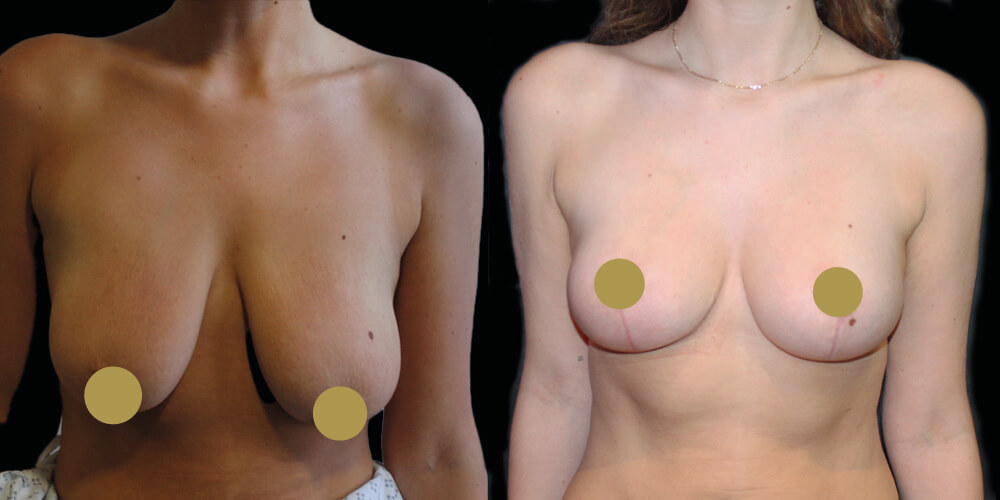
A breast lift, or mastopexy, is a surgical procedure that lifts the breast tissue, tightens stretched skin, and repositions the nipple–areola complex. The goal is to restore a more youthful, uplifted breast shape without necessarily changing breast size. We can use your existing tissue to create some volume using the auto-augmentation technique.
What a Lift Can Achieve
-
Correct sagging (ptosis)
-
Raise and reshape the breast mound
-
Improve nipple position
-
Remove excess or loose skin
-
Restore a firmer, rounder contour
What a Lift Cannot Do
-
It cannot add volume in the upper pole on its own
-
It does not significantly increase breast size
-
It cannot stop future ageing or gravity changes
Clinical literature confirms that mastopexy improves ptosis and contour but does not replace volume lost after breastfeeding or weight loss.
What Are Breast Implants (Augmentation)?
Breast augmentation involves inserting silicone implants behind the breast tissue or muscle. This treatment adds volume, enhances the cleavage area, and increases projection.
What Implants Can Achieve
-
Increase cup size
-
Restore fullness, especially deflated upper pole
-
Improve symmetry
-
Enhance shape in clothes and swimwear
What Implants Cannot Do
-
They cannot correct sagging on their own
-
They do not reposition nipples if they sit too low
-
They cannot stop future ageing changes
Published studies show implants augment size and projection but are limited in addressing ptosis unless combined with mastopexy.
Breast Lift vs Breast Implants: Clear Comparison
|
Feature |
Breast Lift |
Breast Implants |
|---|---|---|
|
Purpose |
Lift and tighten breasts |
Increase size and fullness |
|
Best for |
Sagging, low nipples, stretched skin |
Volume loss, flatness, small breasts |
|
Scarring |
Yes – typically around the nipple ± vertical/anchor |
Minimal – crease incision |
|
Longevity |
Long lasting, but ageing continues |
10–20 years depending on implant |
|
Nipple Position |
Repositioned |
Unchanged unless combined with lift |
|
Volume Restoration |
Limited |
Excellent |
|
Recovery |
6 weeks |
4-6 weeks |
How to Know If You Need a Lift, Implants, or Both
Mr Reza Nassab approaches this is a systematic way to decide and this involves three things:
-
Degree of skin laxity
-
Nipple position relative to the inframammary fold (IMF)
-
Whether you want more volume
This is based on the internationally recognised ptosis grading system used in plastic surgery research.
Understanding Breast Ptosis (Sagging)
Breast ptosis is classified as:
Grade 0 – No Ptosis
-
Nipple sits above the fold
-
Breast is naturally full
-
Implants alone are usually enough
Grade I – Mild Ptosis
-
Nipple sits at the level of the fold
-
Slight sagging
-
Implants may correct this, depending on tissue quality
Grade II – Moderate Ptosis
-
Nipple sits below the fold
-
Mild skin excess
-
Lift required for natural result
-
Implants alone will not elevate nipple position
Grade III – Severe Ptosis
-
Nipple at the lowest point of the breast
-
Significant skin excess
-
Lift necessary, with or without implants
Pseudoptosis
-
Nipple is in a normal position but the lower pole is sagging
-
Common after breastfeeding
-
Implants or lift depending on goals
These classifications are standard across surgical literature and help determine suitability for augmentation vs mastopexy.
Do You Need a Lift or Implants?
-
Are you happy with your breast size?
-
Yes → Go to Step 2
-
No → You may need implants
-
-
Is your nipple sitting below the fold?
-
Yes → A lift is required
-
No → Go to Step 3
-
-
Do your breasts feel empty or deflated at the top?
-
Yes → Implants recommended
-
No → A lift alone may be enough
-
-
Do you want a fuller upper pole (push-up bra look)?
-
Yes → Implant or lift + implant
-
No → Lift alone
-
When a Breast Lift Alone Is the Best Option
A breast lift is usually the right treatment when:
-
You have sagging or drooping
-
Your nipples point downward
-
Your areola has stretched
-
You like your breast size but not the shape
-
You do not want implants
-
You want a more natural, perkier breast without extra volume
A mastopexy reshapes rather than enlarges the breast.
When Breast Implants Alone Are the Best Option
Implants are the better choice when:
-
You want to increase breast size
-
You have lost volume after pregnancy or weight changes
-
Your breasts look “empty” at the top
-
You have good nipple position
-
You want more projection or cleavage
-
Your skin has mild laxity only
In patients with mild ptosis, implants can create the appearance of lift by adding projection.
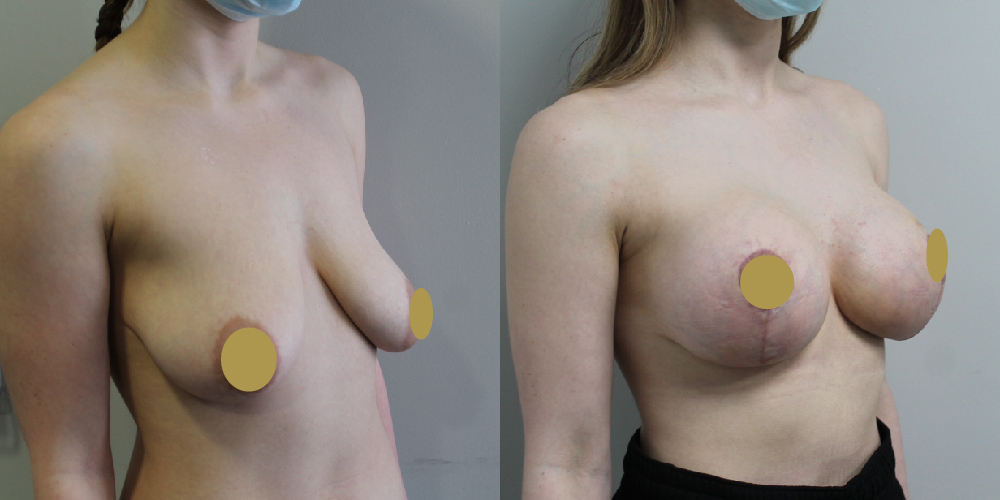
When You Need Both: The Augmentation-Mastopexy
Sometimes the best result comes from combining implants with a breast lift.
Ideal for:
-
Significant sagging with loss of volume
-
Nipples below the fold + flat upper pole
-
Desire for a larger cup size
-
Post-pregnancy and post-weight-loss cases
Augmentation-mastopexy corrects shape, nipple position, and volume at the same time.
Scars, Recovery, and Longevity
Scarring
-
Breast lift: around the nipple, vertical line, sometimes anchor
-
Implants: a small scar in the breast fold (around 4–5 cm)
-
Combined surgery: lift scars + implant incision, often blended into one
Over time, most scars fade and soften.
Recovery
-
Implants: 1–2 weeks for normal activities
-
Lift: 2–3 weeks for normal activities
-
Combined: 2-3 weeks for normal activities
-
Gym: usually after 6 weeks
-
Underwire bras: after 6–8 weeks
Longevity
-
Breast lifts: long-lasting but ageing continues
-
Implants: typically 10–20 years depending on the device
-
Combined: similar timelines, but results depend on skin quality, weight changes, and pregnancies
Risks and Complications
All breast surgeries carry general risks such as:
-
Infection
-
Bleeding
-
Haematoma
-
Seroma
-
Scarring
-
Changes in nipple sensation
Lift-Specific Risks
-
Temporary numbness
-
Delayed wound healing
-
Asymmetry
-
Recurrent ptosis over time
- Nipple necrosis
Implant-Specific Risks
-
Capsular contracture
-
Implant malposition
-
Rippling (especially in thin patients)
-
Need for future replacement
-
Rare risks such as BIA-ALCL with textured implants
Before & After: What Results to Expect
Breast Lift Results
-
Perkier, higher breasts
-
More youthful shape
-
Areola refinement
-
More balanced contour
-
No major change in volume
Implant Results
-
Larger, fuller breasts
-
Improved upper-pole fullness
-
Cleavage enhancement
-
More rounded silhouette
Combined Results
-
Lifted breasts with enhanced volume
-
Restored post-pregnancy shape
-
More dramatic transformation
FAQs Do I Need a Breast Lift or Breast Implants?
Do implants fix sagging breasts?
Implants alone can improve mild sagging by adding projection, but they cannot reposition the nipple. Moderate to severe ptosis requires a lift.
Can I avoid a lift if I choose larger implants?
This is not recommended. Oversized implants can worsen sagging and cause faster stretching of the breast tissue.
Will a lift make my breasts smaller?
A lift does not remove significant breast tissue, but reshaping can make the breasts appear slightly smaller because they are firmer and more compact.
Can you do a lift and implants at the same time?
Yes. A combined augmentation-mastopexy is commonly performed and allows correction of both volume and shape.
How long does a breast lift last?
Most results last many years, but ageing, pregnancy, and weight changes can affect longevity.
How do I know for sure which option I need?
A consultation with Mr Nassab plastic surgeon Manchester is essential. Measuring nipple position relative to the breast fold and assessing tissue quality are key factors.